Remembering my dad, Curtis Moore
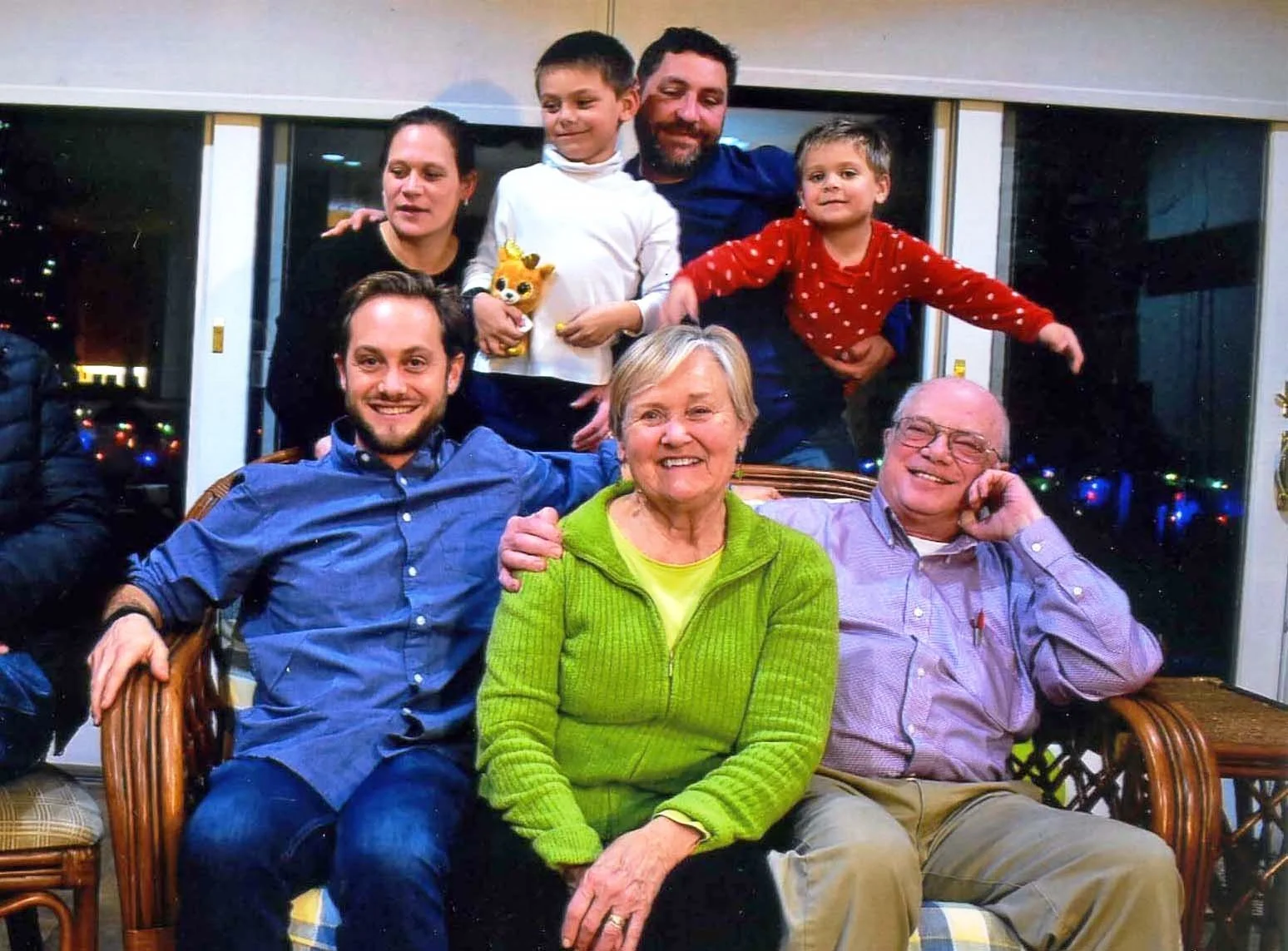
On January 7th, 2026, my dad, Curtis Alexander Moore, passed away at the age of 82.
The following are my remarks at our memorial service for him, on January 13, 2026, as well as a video of one of the hearings he staffed— the Senate Environment and Public Works Committee hearing about the “Greenhouse Effect,” the first-ever hearing focused specifically on global warming and climate change in December 1985.
On the wall in our house for years was a quote from Charlton Ogburn, a communications officer in a special operations unit during WWII that served behind Japanese enemy lines in Burma, that engaged in jungle and guerilla warfare.
It was called Merrill’s Marauders. It was one of the most grueling operations of the war. Of the 2,750 members in the unit, 2748— all but two— suffered serious injury, illness, or death.
The quote from Ogburn read:
Being unready and ill-equipped is what you have to expect in life. It is the universal predicament. It is your lot as a human being to lack what it takes. Circumstances are seldom right. You never have the capacities, the strength, the wisdom, the virtue you ought to have. You must always do with less than you need in a situation vastly different from what you would have chosen as appropriate for your special endowments.
In a nutshell, we’re always outmatched in life, and stepping up to that, in service of one another, is what it means to live well.
This is so much a part of how I see and remember my dad. As a fierce fighter, someone who, to quote my mom, “fought for everything he has ever had in this life.”
As part of that, I want to share a few minutes of my dad’s life, and his fight, in the words of my mom, from a story entry she wrote for all of us a few years ago. It starts:
As best he can figure out, it was Curtis’ granddaddy and Aunt Kathryn who were his primary caregivers in the early years of his life. It was from his grandfather that he got his overwhelmingly strong sense of right and wrong, and his commitment to truthfulness. His grandfather called him “Rattler” and Curtis would often quote the things his grandfather told him:“Rattler, even though you find something on the ground, it isn’t yours. It belongs to somebody else.”
But when he was about 11 or 12 his granddaddy was diagnosed with some sort of gut cancer. After his grandfather died, he and his mother returned to St Louis, Curtis said his mother was never the same. She began drinking heavily, left him, and he began to fend for himself.
The fighter emerged.
Curtis rented a room, had 3 jobs to support himself, and went to high school. He balanced all of that at age 14 for some months. But school became more difficult and the authorities caught up with him when he stopped attending.
Although the pharmacist for whom he worked offered to take him in, he was sent to Raleigh NC to live with his Aunt Kathryn. He remembers being put on a greyhound bus by a friend of his mother. His possessions were in a brown paper bag and that is how he arrived in Raleigh.
Fast forward the tape a bit, from there, his fight to make it in life continued:
He fought to put himself through, and graduate college.
He kept his head above water by finding jobs in journalism, and on political campaigns.
He got drafted by the Army, and rather than be “cannon fodder,” fought his way to become an officer in the Marine Corps, including an 11 month deployment and then suffering an injury while taking incoming fire in Vietnam.
Using the GI bill, he went to Law School at Georgetown, and worked on the Hill.
They moved to Seattle, where he was rejected by every large law firm in town— being told he was too “mature” to be an associate and -- by the way, nobody was interested in hiring a Vet, either. So he started a law practice on Bainbridge Island.
They returned to DC three years later and he joined the Senate staff. Returning to writing books, magazine articles, law review articles; pro bono environmental work, and international environmental consulting.
In 82 years of living he never took the easy route.
I think everyone here with us right now is here because Dad, Curtis, fought in service of us in one way or another.
He had a lot of hardship in his life. But he channeled that hardship into hard work and service— he didn’t want others to experience what he did.
You were always well fed by Curtis. Filled to the brim. Crabs, ribs, shrimp, hot dogs, burgers, corn, pulled pork, a whole damn pig. You were full for two days.
And that’s because he went hungry a lot as a kid. So feeding others was how he expressed care. That’s the kind of man he was.
I know that’s how he’d want to be remembered: as someone fiercely loyal, who believed in supporting those he loved to be nourished; to grow; to have the courage to act even, as Ogburn said, “when the circumstances aren’t right, or you're doing with less than you need in a situation vastly different from what you would have chosen as appropriate.”
We all carry on that legacy.
May he rest in peace.
Love, your son, Trav